
HOME / CMF · COMFORT / LOG 2026-10-11
Between two runs: the ten-minute break where the headset rests
Headset off, check the lenses, water, sit down, one short LingFit lesson: how the mid-session break becomes a fixed, clearly bounded block.
- Pause
- sitzend
- außerhalb der Boundary
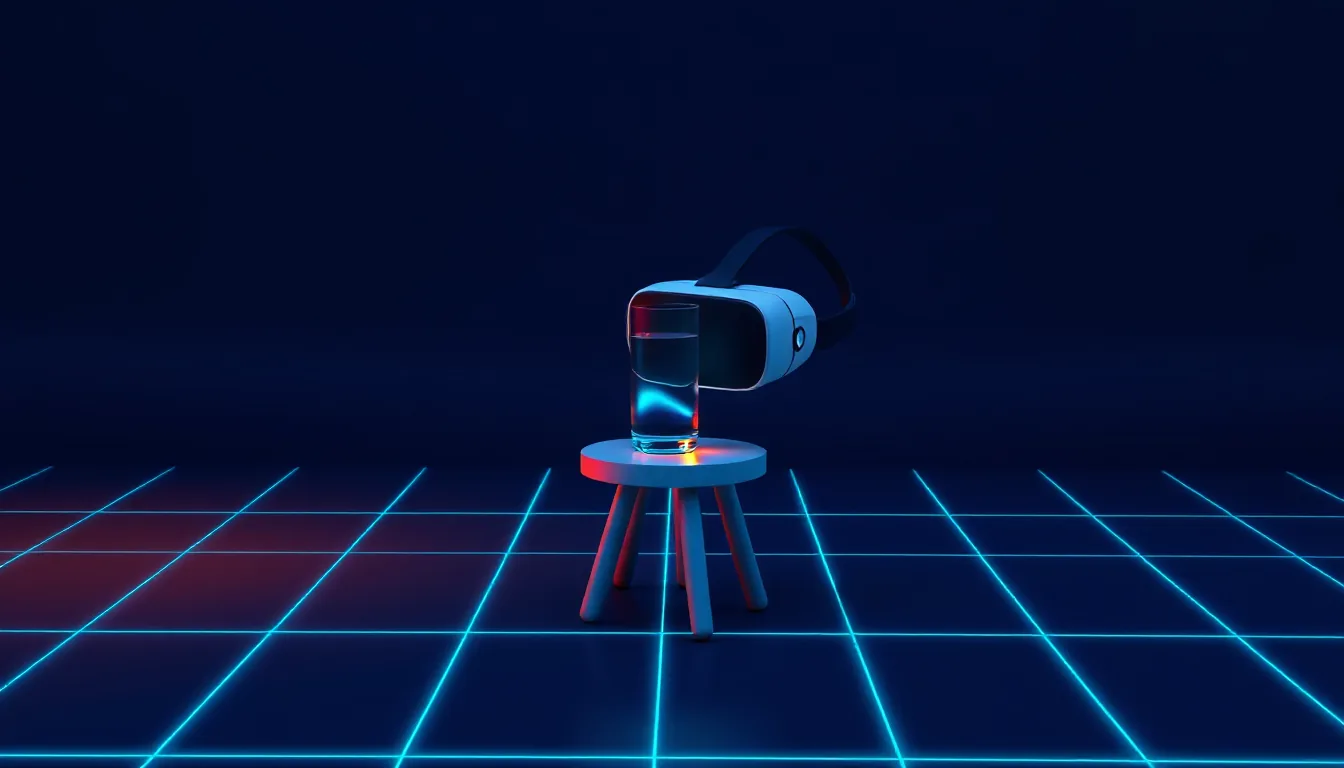
We all know the moment: the second run went well, the third is about to follow, and you’ve actually been in the headset for forty-five minutes already. Your forehead is warm, the face pad is slightly damp, and concentration is slipping even if you haven’t noticed yet. Most of us think of breaks as the end of a gaming evening. This guide is about the other kind of break: the one in the middle of the evening, between two runs.
The idea is simple. The break gets a fixed shape, a fixed length and something to do that has nothing to do with the headset. For the latter we’re using a lesson in LingFit, a language-learning app for iPhone, iPad and Android. We’ll explain why that in a moment. First, the basics.
Why the break in the middle counts
Meta’s health and safety guidance for the Quest recommends regular breaks, roughly 10 to 15 minutes after every 30 minutes of use, even if you feel fine. In practice, plenty of scalers skip exactly that advice, because a break feels like a break in the evening. The trouble is this: if you only rest at the end of the evening, you often play that last half hour with tired eyes, slower reactions and a posture your neck will comment on the next day.
A break in the middle also has a technical side effect. The Quest’s battery gets a few minutes on the charging cable, the lenses can air out, and the face pad dries off before it touches your skin again.
The break checklist
Here’s the order we reckon makes sense. It takes about ten minutes in total.
- Pause the game or stop at a save point. Don’t just put it down mid-level and hope for the best.
- Take the headset off and put it down properly. Lenses facing down or to the side, never towards a window. Direct sunlight through the lenses can damage the displays, and that applies to short breaks too.
- Check the lenses. Wipe only with a dry microfibre cloth, in circular motions from the inside out. No liquids, no alcohol, no paper tissue.
- Look at the face pad. If it’s damp, set the headset down so air can reach the pad. If you use a wipeable pad, you can dab it dry.
- Put the controllers down. Take off the wrist straps, put the controllers in a fixed spot so nobody trips over them.
- Drink water. A full glass, not a sip.
- Sit down, outside the boundary. The chair goes next to the play area, not inside it.
- Start a clearly bounded activity. For us, that’s a LingFit lesson.
- Stand up and stretch before the next run. Roll your shoulders, loosen your neck, and only then put the headset back on.
- Confirm the boundary when you put it back on. If anything shifted in the room during the break, check the boundary again.
Why a language lesson and not social media
Your phone is in your hand during the break anyway. The difference lies in what it does to us. An endless feed has no end, and that’s exactly the risk: ten minutes easily become thirty, and the next run doesn’t happen at all. A lesson, by contrast, has a beginning and an end.
A lesson in LingFit is part of a course with 60 chapters per language direction, each with 8 levels of 10 lessons each, from A1 to B2. A single lesson is therefore a small, self-contained unit. For a break that’s ideal, because you know in advance when you’re done.
There’s also a detail that fits the logic of a break nicely: about halfway through every lesson there’s a so-called half-time break. One of the animated mascot characters turns up, shows your progress so far and tells a joke or a fun fact about itself. It only takes seconds, but it gives the lesson a structure you can feel. At the end comes the Redo round: words you got wrong reappear under the heading “Let’s improve!” until they stick. When the Redo round is over, the lesson is over. That’s the signal to get up.
What happens in those ten minutes
A typical lesson mixes several exercise formats. Among them are vocabulary cards to swipe, picture-to-word tasks, speed matching against the clock, listening exercises with individual words or whole sentences, a sentence builder made of word bubbles and a speaking exercise where words light up green as soon as the app recognises them.
For a VR break we find two things about this handy:
- Your eyes work differently. After the Quest we’re looking at a phone screen at normal reading distance. That’s a different strain from a display right in front of your eyes, but it’s still screen time. If you’d rather stay completely screen-free during the break, you should. The lesson is an offer, not an obligation.
- Your head changes topic. Instead of replaying the last level in your head, you’re dealing with word order or pronunciation. That feels like a break, even if you’re not idle.
Important: the listening exercises work without sound too. If you can’t play anything right now, the app shows you the word instead. So if you’re playing in the same room as sleeping flatmates, you don’t have to go hunting for headphones during the break.
Keeping the break clearly bounded
The trick with this break is the boundary. A few rules that seem sensible to us:
- One lesson, not two. If you fancy more after the first lesson, make a note of it for tomorrow. The evening belongs to the headset.
- Don’t open the games tabs. LingFit has games with friends, such as the round-based duel Ping Pong or the endurance race Tug of War. They’re good fun, but they’re not meant for a ten-minute break.
- Leave notifications alone. The app can send daily reminders. A break in the middle of a gaming evening doesn’t need a reminder, it comes out of the evening itself.
- Keep the timer in your head. Ten minutes is the lower limit, not the upper one. If you still feel tired after the lesson, extend the break or call it a night.
Comfort tips for the second run
Getting back in is the moment when you either use the break or waste it.
- Readjust the headset. After a break the head strap often sits differently. Loosen the strap, put the headset on, then tighten from the back, not the front.
- Check the IPD. If you share the headset with others, quickly check after every break whether the lens distance (IPD) still fits.
- Don’t keep playing if you feel unwell. If you notice dizziness, nausea or headaches, end the evening. A break is not a way to push symptoms down.
- Check the room. Things can move during a break: a bag on the floor, a chair that’s slid back. Have a quick look round before you put the headset on.
If you don’t want to learn a language at all
Fair’s fair: this break works without a language app too. The principle is an activity with a clear end that has nothing to do with VR. A chapter of a book, a crossword, a glass of water at an open window. If you do want to learn a language anyway, though, a lesson gives you a unit that fits exactly into this gap. More about the course and the language directions is on lingfit.app.
For context: LingFit is a subscription app. According to the provider, the annual plan costs around 40 US dollars a year and starts with a seven-day trial phase; prices can vary depending on the store and country.
Scaler’s take: The break in the middle of the evening is the one we skip most often and need most. With a fixed checklist and a single lesson as a clearly bounded block, it becomes routine instead of an interruption. Headset off, lenses facing down, water, one lesson, stretch. Only then the next run.
Linked logs
-
PLY
6 MIN
The pit lane next to the playspace: a break corner with charging dock, chair and phone tray
A setup guide for the area just outside the boundary: charging dock, chair, trays and cable routes that never intrude into the play area.
- Randzone
- 1 × 1 m
- außerhalb der Boundary
-
MXR
6 MIN
Room labels as a vocabulary list: building your own pack from the Quest's scene labels
During Space Setup the Quest names the table, sofa, window and door. Those very words become the word list for your own LingFit pack.
- Ganzer Raum
- Space Setup
- Mixed Reality
-
TEC
5 MIN
Lobby callouts: a vocab pack for European multiplayer sessions on the Quest
Left, right, behind you, cover: how to build a callout chapter in LingFit for German-, French- or Spanish-speaking lobbies.
- Room-Scale
- Multiplayer
- Sprachchat
-
PLY
6 MIN
Where the rift tears open: understanding wall selection in Sozo and shaping it with your scan
Which wall Sozo picks for the rift, why doors and windows are off limits, and how a cleanly marked scan gives you better arenas.
- Wandscan
- stehend
- Mixed Reality